
Wooden Dowels vs Steel: Why Bira Hulls Are Built Without Nails
Bira Boat Builder Desk
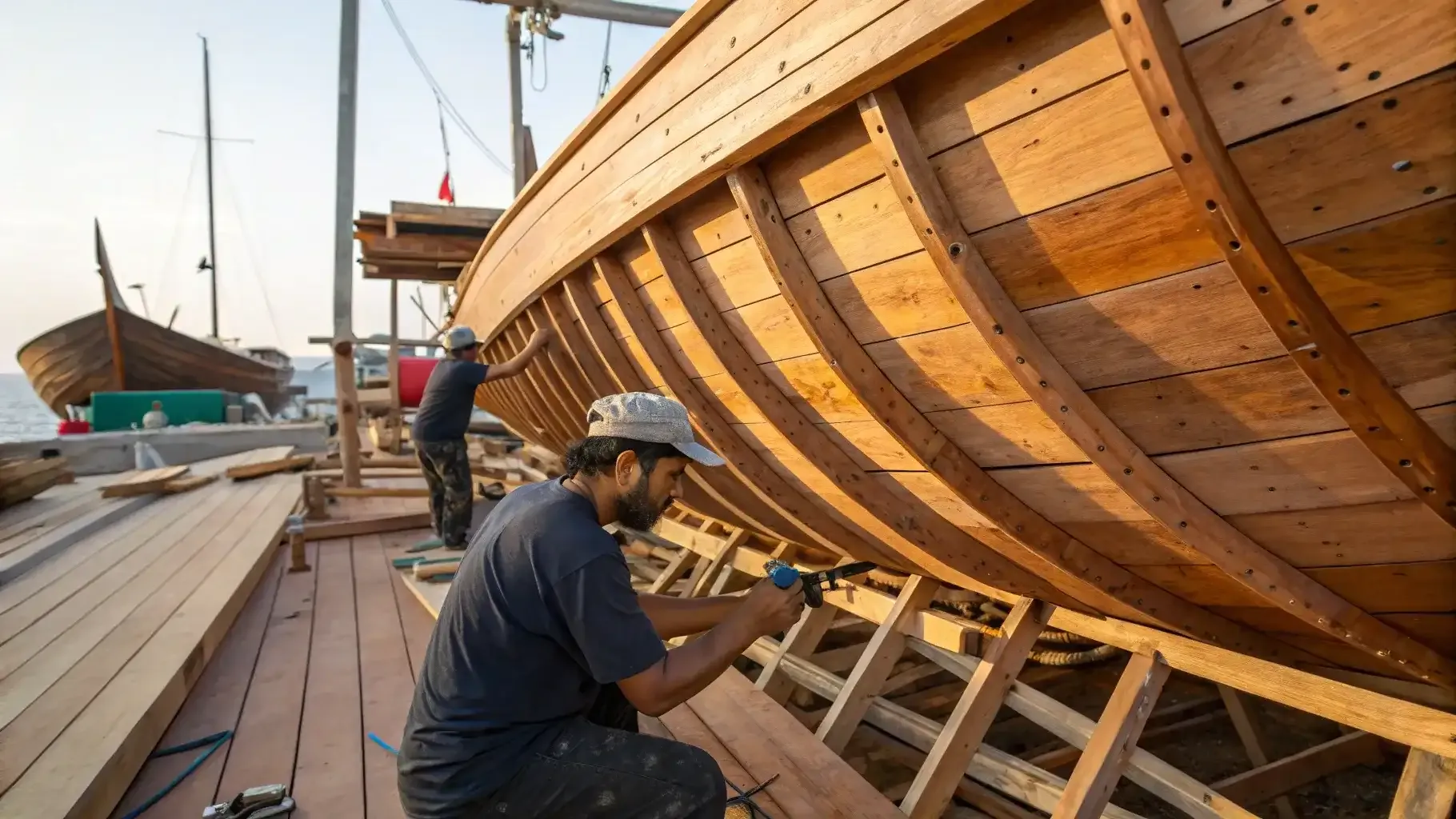
Bira hulls are dowelled, not nailed, and it is a deliberate engineering choice. Hardwood dowels – pasak – swell against the planking once wet, never corrode in seawater, and let the hull work as one flexible structure. Steel nails would rust, weep and split the wood around them. Dowels are why beach-built hulls survive decades of tropical service.
How a dowelled joint works
Planks are edge-fastened to each other with pasak driven into pre-bored holes. As the timber takes up water the dowel and plank swell together, tightening the joint rather than loosening it.
Why steel would fail
- Steel corrodes in salt water, staining and weakening the surrounding wood.
- A rigid fastening fights a hull that needs to flex; dowels move with it.
- Rusting fasteners create leaks exactly where they are hardest to reach.
Part of the hull-first method
Edge-dowelling is what makes the hull-first sequence possible – the shell holds its shape before frames go in, as explained in the piece on building from memory. The full material picture is on the timber and craft page.
Ask how your hull would be fastened or email sales@komodoluxury.com
Frequently asked questions
Why are Bira boats built with wooden dowels instead of steel nails?
Hardwood dowels swell with the planking, never corrode in seawater and let the hull flex as one structure. Steel nails would rust, weaken the surrounding timber and cause leaks, so dowels are the traditional and more durable choice.
Related reading
Craft, Timber & Heritage
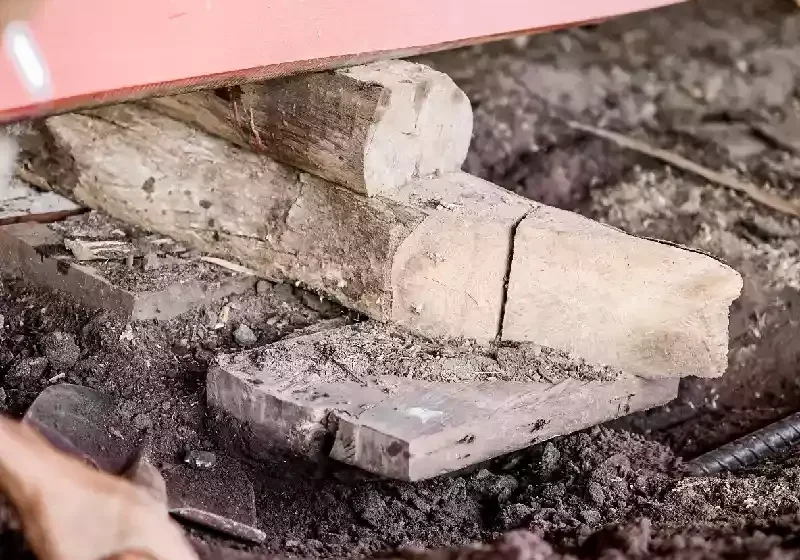
How Long a Wooden Phinisi Hull Actually Lasts
A well-built, well-maintained wooden phinisi hull routinely serves for decades. Longevity comes far less from the species alone than from three things: how.
Craft, Timber & Heritage
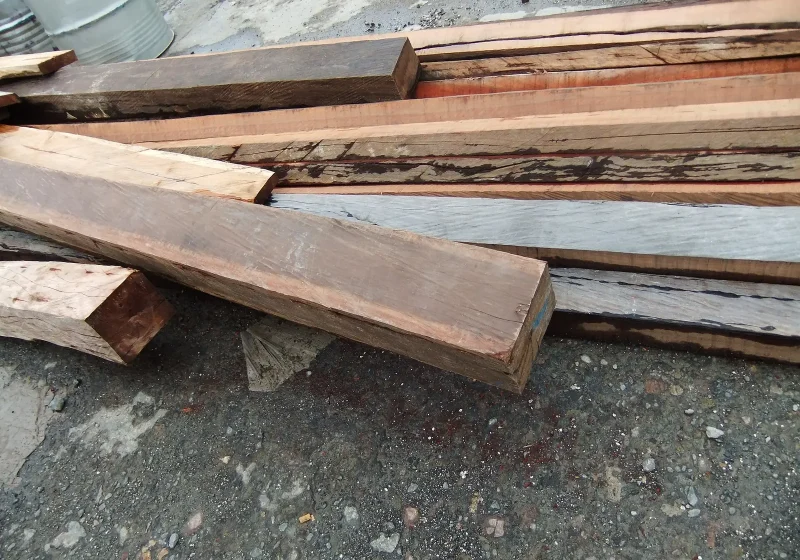
The Wood Question: Bitti, Ulin and the Sustainability Problem
The honest truth about a wooden phinisi is that its best timber is getting harder to find. Bitti, ulin ironwood and teak all come under pressure as old gro.
Craft, Timber & Heritage
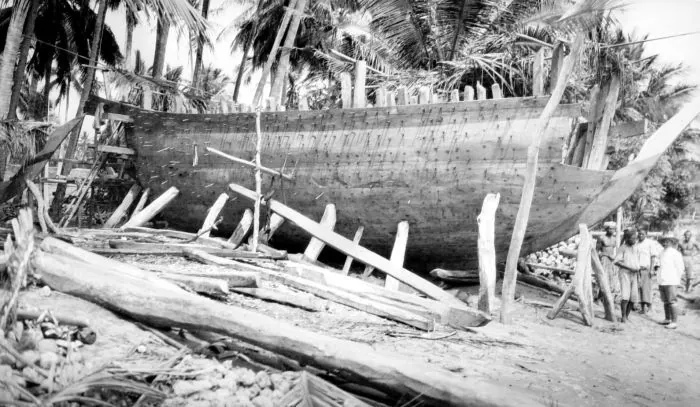
Ara Village: The Carvers Behind the Boats of Bira
Ara is the carvers' village. While Tanjung Bira is the headland visitors know and Tana Beru is the busiest building beach, Ara has historically supplied th.